

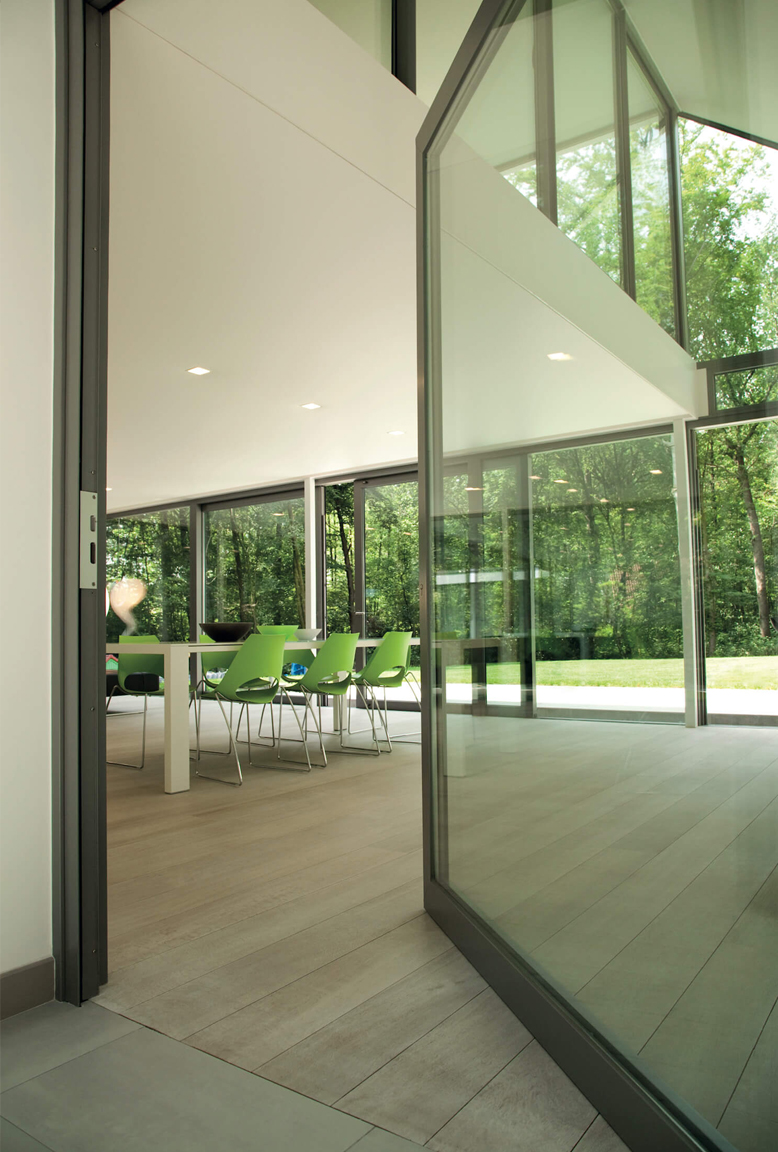
In the world of luxury architecture, the entrance door is more than a functional barrier—it’s a statement. Oversized pivot doors have become the hallmark of high-end residential and commercial projects, offering unparalleled aesthetics and a grand sense of arrival. But as these doors grow in scale and weight, they demand sophisticated engineering and hardware capable of handling massive loads—often exceeding 500kg. This article delves into the world of oversized entrance pivot doors, exploring the critical hardware components, load capacity considerations, and design trends that define modern luxury architecture.
## The Rise of Oversized Pivot Doors in Luxury Design
Pivot doors have been used for centuries, but their recent surge in popularity is driven by a desire for seamless transitions between indoor and outdoor spaces, expansive glass panels, and minimalist aesthetics. Unlike traditional hinged doors that swing from the side, pivot doors rotate on a vertical axis—usually at the center or offset from the center—allowing for wider openings and smoother operation. This makes them ideal for grand entrances that require doors up to 3 meters wide and 4 meters tall.
In luxury architecture, oversized pivot doors are often crafted from premium materials like solid wood, aluminum, steel, or a combination of glass and metal. They serve as impressive focal points, emphasizing height and light. However, their sheer size and weight introduce complex engineering challenges, particularly concerning structural support and hardware reliability.
## Hardware: The Backbone of Heavy-Duty Pivot Doors
The performance of an oversized pivot door hinges (pun intended) on its hardware system. Standard hinges are insufficient for massive loads; instead, pivot systems are engineered with robust components designed to handle extreme forces.
### Pivot Hinges and Floor Springs
The core hardware in a pivot door is the pivot hinge, which is typically embedded in the floor and the top of the frame. For doors weighing 500kg or more, heavy-duty pivot hinges are essential. These hinges distribute the door’s weight vertically and horizontally, reducing stress on the frame and enabling smooth rotation.
Top-quality pivot systems, such as those from manufacturers like FritsJurgens, Dormakaba, and Simonswerk, are designed with ball bearings and thrust bearings to minimize friction and support heavy loads. The floor pivot carries the majority of the door’s weight, while the top pivot provides stability and ensures proper alignment. Some systems incorporate adjustable features to fine-tune the door’s alignment and prevent sagging over time.
### Load Capacity: Understanding the Limits
When specifying hardware for oversized pivot doors, load capacity is a non-negotiable factor. A typical residential door weighs 80-120kg, but oversized pivot doors can easily tip the scales at 400-800kg, depending on size and material. For luxury projects, we often see doors with a load capacity of 1000kg or more, especially when using thick glass or solid metal construction.
Choosing hardware with the correct load rating is crucial. Overtaxing low-rated components can lead to premature failure, misalignment, or even catastrophic collapse. Manufacturers provide detailed load ratings for their pivot systems, which should be matched to the door’s weight, width, and frequency of use. For extreme cases, custom-engineered pivot systems are available.
### Additional Hardware: Locks, Handles, and Seals
Oversized pivot doors require specialized locking mechanisms to secure the entire perimeter. Multi-point locks engage at several points along the door’s height, ensuring a tight seal and enhanced security. In high-end applications, motorized locking systems operated by smart home automation are popular, adding convenience and sophistication.
Handles and pulls must also be sturdy and ergonomic. For large doors, panic bars or push/pull handles are often installed to facilitate easy opening. In luxury settings, custom-designed hardware in bronze, stainless steel, or matte black adds to the aesthetic while ensuring durability.
Seals are another critical component, especially for external doors exposed to weather. High-quality gaskets and weather stripping prevent air and water infiltration, while also providing acoustic insulation. For pivot doors, perimeter seals must be carefully integrated to allow smooth movement without leakage.
## Structural Considerations for Heavy Doors
Beyond hardware, the structural integrity of the surrounding opening is vital. The door’s weight places enormous stress on the floor and header, requiring reinforced construction.
### Wall and Frame Reinforcement
The wall surrounding a pivot door must be framed with steel or reinforced concrete to support the transferred loads. The pivot hinges are typically mounted on steel anchor plates that are embedded in the floor and header, ensuring that the weight is distributed into the building’s structure.
Engineers must calculate the point loads and specify appropriate anchoring methods. Incorrect installation can lead to uneven settling, causing the door to bind or misalign. Therefore, collaboration between architects, engineers, and hardware specialists is essential from the design phase.
### Floor Support
The floor pivot is often housed in a floor box that is cast into the concrete slab. This floor box must be perfectly level and positioned to exact tolerances. For heavy doors, the floor slab itself may require additional underpinning or structural reinforcement to avoid cracking under the concentrated load.
## Engineering Excellence: Design and Materials
Oversized pivot doors are not just about size; they are about integrating immense materials into flawless, functional designs. Let’s explore how materials affect hardware and load.
### Material Choices and Weight
– **Solid Wood**: Oak, mahogany, or teak are classic luxury choices, but they are heavy—a 1m by 3m solid wood door can exceed 300kg. Hardware must be capable of managing the continuous stress of solid wood expansion and contraction.
– **Aluminum and Steel**: Lightweight yet strong, aluminum frames with thermal breaks are common for large glazed doors. However, steel frames with welded joints offer a slim, industrial aesthetic but weigh more due to their density.
– **Glass and Metal**: Large pivot doors featuring expansive glass panels (often double or triple glazed) can be exceptionally heavy. A 3m by 4m unit, for instance, may boast a weight of 500-800kg. The glass must be tempered or laminated for safety, and the frame must be torsionally rigid.
### Impact on Hardware
Heavier materials demand higher performance from hinges and pivots. For example, a solid wood door will exert different lateral forces than a glass door, due to its flexibility and bending moments. Engineers select hardware that not only supports the weight but also compensates for material deflection. Many modern pivot systems include dampers to control speed and prevent slamming, protecting the door and hardware.
## Aesthetic and Functional Integration
In luxury architecture, hardware is not hidden but celebrated. Manufacturers offer a range of finishing options—from polished chrome to brushed brass—that complement the door’s design. Additionally, some pivot systems allow the floor plate to be recessed and hidden for a seamless look, while the top pivot may be discreetly installed within the frame.
Automation has become a hallmark of luxury. Automatic pivot doors, equipped with motion sensors or remote access, offer hands-free operation and enhance accessibility. These systems include drive units that coordinate with the pivots, enabling smooth opening and closing even for massive doors. However, automation adds complexity and requires additional engineering to ensure reliability.
## Case Studies and Applications
Let’s examine a few real-world examples of oversized pivot doors in luxury architecture:
– **Private Villa in the Hamptons**: Featured a 2.5m by 3.5m solid walnut pivot door weighing 700kg. The door was fitted with a concealed floor pivot from FritsJurgens, rated for 1500kg, ensuring silent operation. Multi-point locks and a smart home integration allowed a single touch to unlock and open the door.
– **Penthouse in Manhattan**: A 3m high, 2m wide pivot door of glass and steel served as a breathtaking entrance to a rooftop terrace. The total weight exceeded 900kg due to laminated glass panels. Custom steel pivot supports were anchored to the concrete slab, and hydraulic dampers were installed for controlled closing.
This showcases the necessity for precise engineering—from load calculations to hardware selection—to deliver both beauty and performance.
## Conclusion
Oversized entrance pivot doors are marvels of modern engineering and luxury design. They redefine the notion of an entry, offering grandeur and functionality beyond conventional doors. However, their successful implementation hinges on selecting heavy-duty hardware that can handle 500kg loads or more, and integrating it with proper structural framing.
As a senior structural engineer, I cannot overstate the importance of early collaboration between architects, engineers, and hardware manufacturers. This ensures that the door’s design vision is realized without compromising structural integrity or user experience. By focusing on load capacity, premium pivot systems, and meticulous installation, you can create an entrance that stands the test of time—and becomes a lasting icon in luxury architecture.
Whether you are designing a coastal mansion or a corporate headquarters, understanding the underlying hardware requirements will empower you to achieve spectacular results. When craftsmanship meets engineering excellence, the oversized pivot door becomes more than an entry—it becomes a masterpiece.