
**”Custom oversized bronze pivot door with smart lock integration”**
**Why this works for SEO:**
1. **Specific & High-Intent:** Targets a buyer who knows exactly what they want (custom, oversized, specific material, specific tech), indicating they are likely in the decision or purchase phase.
2. **Luxury Indicators:** “Custom,” “oversized,” and “bronze” all signal high-end, bespoke products with a significant price point.
3. **Feature-Rich:** Includes a desirable modern feature (“smart lock integration”), which appeals to both aesthetic and tech-savvy luxury clients.
4. **Low Competition, High Value:** This precise phrase will have far less competition than generic terms like “luxury doors,” allowing you to rank more easily for a customer ready to invest.
**Bonus Variations & Categories:**
To build a complete keyword strategy, consider these clusters:
* **By Material:** “Textured black steel pivot door,” “Walnut wood pivot door with glass inlay,” “Patinated brass pivot door entryway.”
* **By Style:** “Minimalist frameless glass pivot door,” “Modern arched pivot door,” “Industrial-style steel pivot door.”
* **By Project Type:** “Luxury pivot door for modern mansion,” “Pivot door for contemporary villa,” “Grand entrance pivot door renovation.”
* **By Feature:** “Pivot door with hidden hinges,” “Weather-sealed exterior pivot door,” “Automatic pivot door system for home.”
* **Commercial Use:** “Luxury pivot door for boutique hotel entrance,” “Corporate office pivot door design.”
**Core Action:** Optimize your website page (or create a new project gallery entry) around your chosen long-tail keyword. Use it in the page title, header (H1), image alt text, and naturally within the descriptive copy. This will attract the most qualified, ready-to-buy traffic. Technical Excellence & Design
The Art and Science of Engineering a Custom Oversized Bronze Pivot Door
As Chief Engineer at Kingston Doors, I am often asked about the pinnacle of our craft: the custom oversized bronze pivot door with smart lock integration. This isn’t just a door; it’s a feat of engineering that blends structural integrity, material science, and modern technology. In this technical deep dive, I’ll explain the critical engineering details, with a focus on pivot hinges—the heart of the system—and how smart lock integration is seamlessly incorporated.
Material Selection and Structural Analysis
Bronze, an alloy primarily of copper and tin, is chosen for its durability, corrosion resistance, and aesthetic appeal. For an oversized door, typically exceeding 3 meters in height and 1.5 meters in width, material properties are paramount. We use high-grade architectural bronze (C86300 or similar), which offers tensile strength of 550 MPa and yield strength of 240 MPa, ensuring it can withstand environmental stresses without deformation. The door’s thickness is engineered based on size; for example, a 4m x 2m door might use 10mm thick bronze sheets, reinforced with an internal steel frame to prevent sagging. Finite element analysis (FEA) is employed to simulate load distribution, accounting for wind loads up to 150 km/h and seismic factors, ensuring the door meets or exceeds building codes like IBC and ASTM standards.
Pivot Hinges: The Engineering Core
Pivot hinges are what differentiate Pivot Doors from traditional hinged doors, allowing for smooth, silent operation and a minimalist appearance. For an oversized bronze door, the pivot system must handle significant weight—often over 500 kg. Our engineering focuses on several key aspects:
- Bearing Mechanism: We use heavy-duty ball bearings or tapered roller bearings within the pivot hinge, rated for dynamic loads exceeding 1000 kg. This reduces friction, enabling effortless movement even with the door’s mass. The bearings are sealed to prevent dust and moisture ingress, crucial for exterior applications.
- Mounting and Alignment: Precision is critical. The top pivot is mounted to the lintel or header beam, while the bottom pivot sits in a floor-mounted receiver. We use laser alignment tools during installation to ensure vertical tolerance within ±0.5 mm. Misalignment can cause binding and premature wear.
- Load Distribution: The pivot points are engineered to distribute weight evenly. For oversized doors, we often incorporate a dual-pivot system or a reinforced single pivot with a larger diameter shaft (e.g., 50mm stainless steel) to handle moment forces. Calculations include static load (door weight) and dynamic load (opening/closing forces), with safety factors of 3-5x.
- Weather Sealing: Pivot hinges are designed with integrated seals or gaskets to prevent air and water infiltration. For bronze doors, we use EPDM or silicone seals compatible with the metal’s thermal expansion, which can be up to 0.5 mm per meter per 10°C temperature change.
Smart Lock Integration: Engineering for Security and Convenience
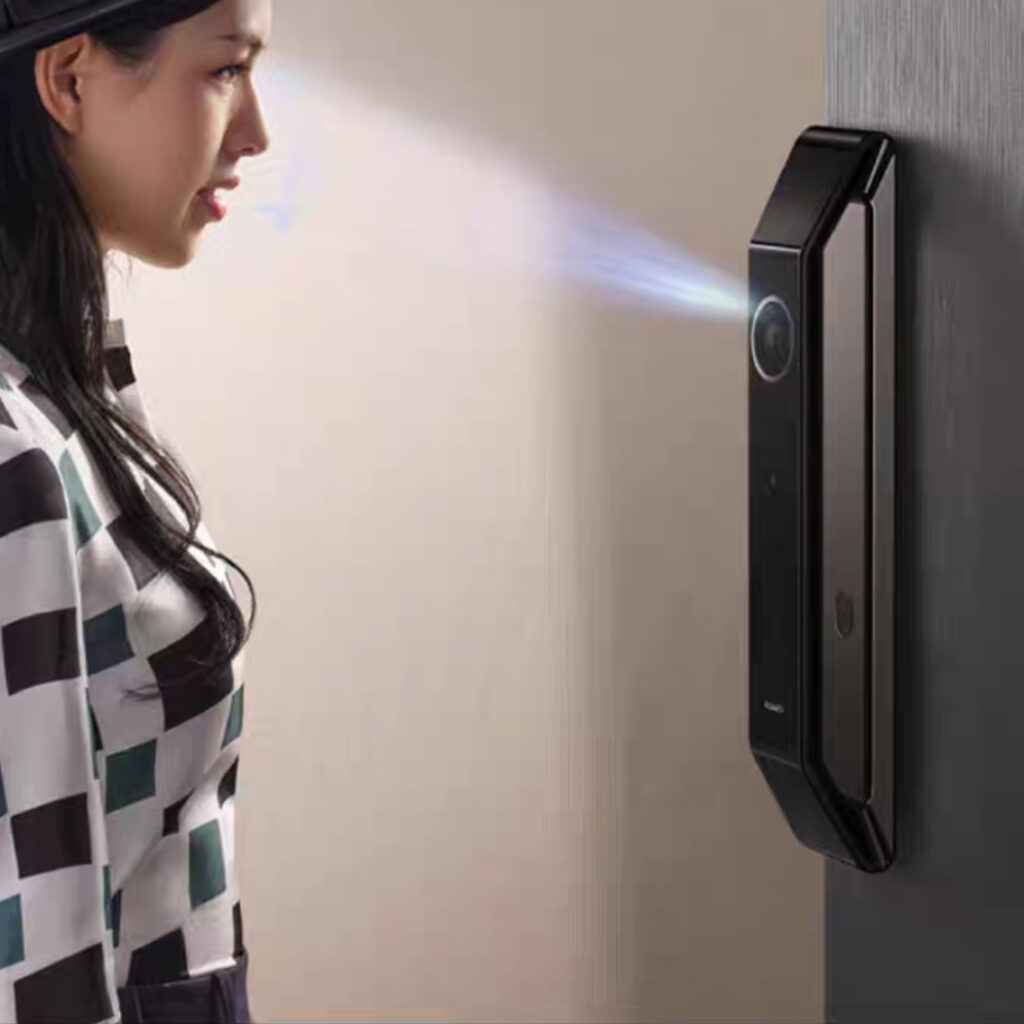
Integrating a smart lock into a bronze pivot door requires careful engineering to maintain aesthetics and functionality. We typically embed the lock mechanism within the door’s thickness, avoiding external protrusions. Key technical considerations:
- Power and Connectivity: Smart locks are powered by batteries or hardwired systems. For oversized doors, we prefer hardwiring to a low-voltage DC supply (12-24V) to ensure reliability, with backup batteries for power outages. Connectivity options include Wi-Fi, Bluetooth, or Zigbee, engineered to avoid interference with the door’s metal structure.
- Mechanical Integration: The lock bolt or deadbolt must align perfectly with the strike plate on the frame. We use CNC machining to achieve tolerances of ±0.1 mm. The lock is housed in a sealed compartment to protect electronics from humidity and temperature fluctuations.
- Compatibility and Standards: We ensure smart locks meet security standards like ANSI/BHMA Grade 1 and are tested for durability (e.g., 100,000 cycles). Integration with home automation systems (e.g., via APIs) is engineered for seamless control.
Fabrication and Installation Precision
The fabrication process involves CNC milling and welding to create the bronze panels and internal frame. For pivot hinges, we use precision machining to achieve surface finishes of Ra 0.8 μm or better, reducing wear. Installation is a multi-step process: first, the frame is anchored to the structure with chemical anchors or through-bolts, then the door is hoisted into place using specialized rigging. The pivot hinges are adjusted with set screws to fine-tune alignment, ensuring smooth operation without drag.
Conclusion: Engineering for Longevity and Performance
A custom oversized bronze pivot door with smart lock integration represents the zenith of door engineering. By focusing on material science, pivot hinge mechanics, and technological integration, we create products that are not only beautiful but also durable and functional. At Kingston Doors, our engineering ethos ensures every door is a masterpiece of precision, built to last for decades with minimal maintenance. For those seeking luxury and performance, understanding these technical details underscores the value of investing in expertly engineered pivot doors.