
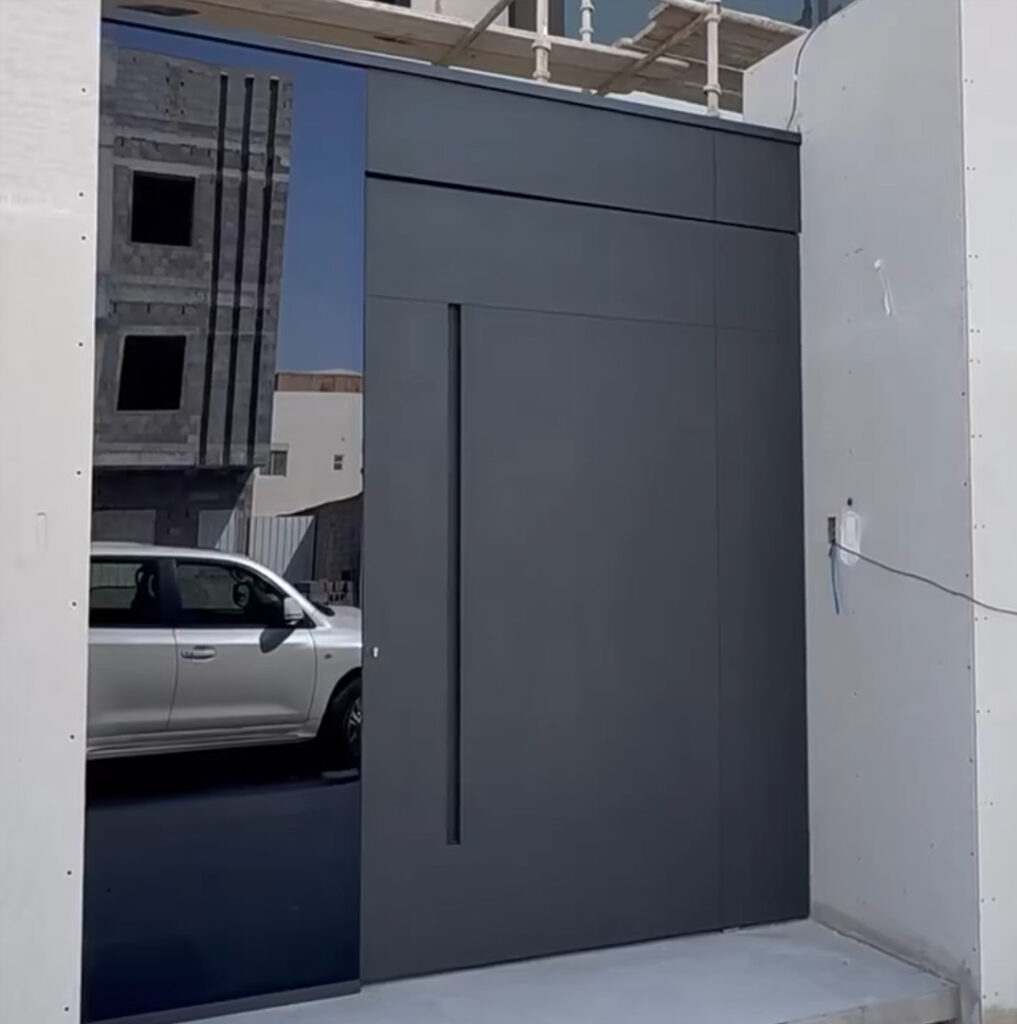

The Engineering Challenge of Custom Oversized Pivot Entry Doors
As Chief Engineer at Kingston Doors, I oversee the design and fabrication of high-end architectural entryways, with a particular focus on custom oversized Pivot Doors for modern luxury homes. These doors represent the pinnacle of both aesthetic ambition and mechanical complexity. Unlike standard hinged doors, which rely on side-mounted hardware, pivot doors rotate on a vertical axis located away from the edge, allowing for seamless, dramatic openings that can exceed 10 feet in height and 5 feet in width. The engineering behind these systems is meticulous, balancing structural integrity, operational smoothness, and longevity.
Core Engineering Principles of Pivot Hinges
At the heart of every pivot door is the pivot hinge mechanism, a sophisticated assembly that must handle immense static and dynamic loads. Our hinges are engineered from high-grade stainless steel or bronze, chosen for their strength and corrosion resistance. The pivot point consists of two primary components: the top pivot, which carries the door’s weight and provides vertical alignment, and the bottom pivot, which bears the axial load and facilitates rotation. We integrate tapered roller bearings or precision ball bearings within these pivots to ensure frictionless movement, even under loads exceeding 500 pounds. The hinge design includes adjustable tension settings, allowing for fine-tuning to compensate for settling or environmental changes, ensuring the door remains plumb and operates smoothly over decades.
Structural Considerations for Oversized Configurations
Custom oversized doors, often spanning 8 to 12 feet in height, require rigorous structural analysis. We use finite element analysis (FEA) software to model stress distributions across the door leaf and frame. For glass-panel doors, such as those with black steel frames, we engineer thermally broken aluminum or steel reinforcements to prevent thermal bridging and ensure stability. The pivot hinges are anchored into structural steel reinforcements within the wall or floor, typically using through-bolts or welded plates that distribute forces into the building’s load-bearing elements. This prevents point loading that could cause cracking or failure in luxury home constructions.
Material Integration and Weatherproofing
Material selection is critical for both performance and aesthetics. For walnut or bronze pivot doors, we engineer the pivot hinges to interface seamlessly with custom finishes, using concealed fasteners and precision machining. Weatherproofing is a key concern for entry doors; our hinges incorporate multi-point sealing systems with EPDM gaskets and drainage channels to prevent water ingress. In smart home compatible models, we route wiring for automated systems through the pivot mechanism, using shielded conduits to protect against electromagnetic interference and physical damage.
Installation and Long-Term Performance
Proper installation is paramount. Our engineering team provides detailed schematics specifying exact tolerances (often within ±1/16 inch) for rough openings and anchor placements. We recommend collaboration with architects and builders early in the design phase to integrate structural supports. Post-installation, our hinges are designed for minimal maintenance, with self-lubricating bushings and stainless steel components that resist wear. Regular inspections, as outlined in our technical manuals, ensure ongoing performance, making these doors a reliable investment for luxury homeowners.
Conclusion
Engineering custom oversized pivot entry doors for modern luxury homes involves a blend of advanced mechanics, material science, and architectural integration. By focusing on robust pivot hinge systems and precise fabrication, we deliver doors that are not only stunning but also engineered to last. For those specifying such doors, attention to structural details and professional installation is essential to achieve the desired aesthetic and functional excellence.