
When a 12-Meter Glazed Aperture Must Withstand a 150 km/h Wind Load: The Engineering of Luxury Folding Doors
The architectural ambition for seamless indoor-outdoor living is often first constrained by structural physics, not budget. A vast, uninterrupted opening represents a significant breach in a building’s envelope, creating a complex challenge of managing deflection, transfer of live loads, and maintaining thermal and weather integrity. Luxury is not defined by a finish, but by the engineered solution that makes the visual simplicity possible. This is the discipline behind high-performance aluminum folding door systems.
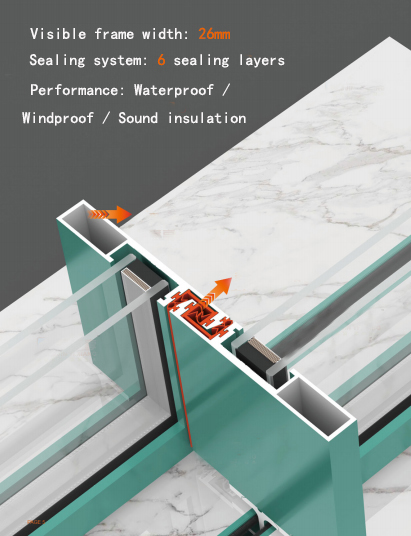
Fig. 1: Structural load path analysis for a multi-panel folding system under lateral wind pressure. The load is transferred through interlocked panels to the master frame and ultimately to the building structure.
The Load-Bearing Anatomy of a Folding System
A folding door is a dynamic assembly, not a static panel. Each component must perform a dual function: provide structural integrity and facilitate smooth operation. The primary metrics are profile wall thickness, alloy temper, and bearing system design.
Master Frame & Sill Construction
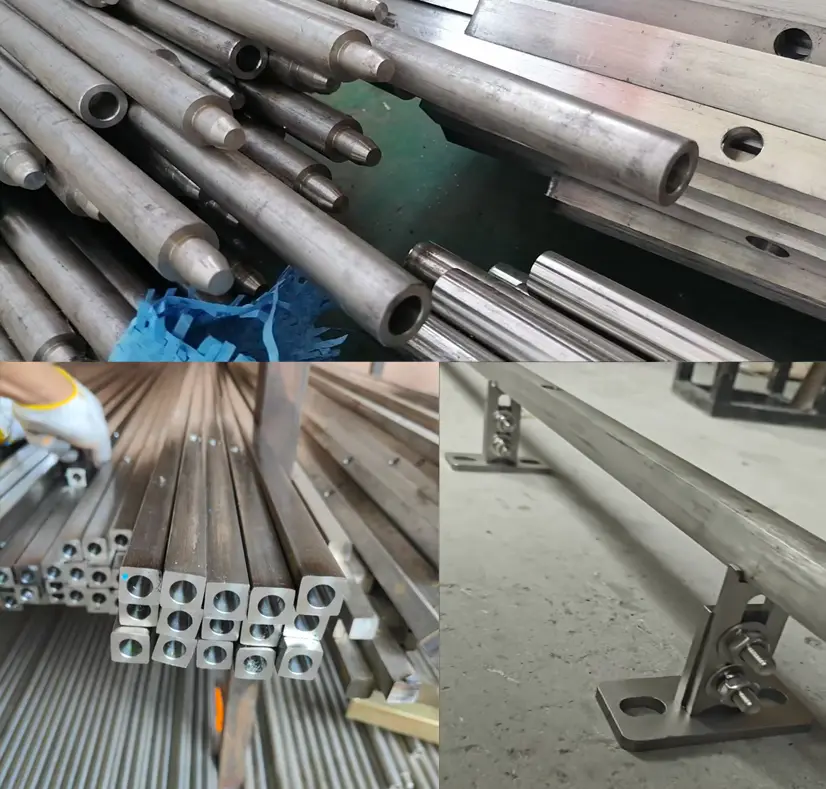
The fixed master frame is the structural anchor. For systems spanning over 6 meters or exceeding 3.5m in height, the perimeter profiles must be constructed from reinforced aluminum with a minimum wall thickness of 3.0mm. This is not a commercial gauge; it is a structural necessity to resist racking forces and provide a rigid anchor point for the track and hardware. The sill, particularly in a threshold-drainage configuration, is a fabricated assembly, not an extrusion. It must integrate the track, drainage channels, and structural support, often weighing over 25 kg per linear meter for its assembled complexity.
Moving Panel Profiles
Each moving panel is a cantilevered beam when extended and part of a coupled shear wall when stacked. To control deflection to acceptable limits (typically L/175 for glazed elements), panel profile thickness is critical. Luxury systems utilize profiles with a minimum of 2.5mm wall thickness in stress-critical areas—the stiles (vertical members) that house the hardware. The use of alloy 6060-T66 or 6063-T6 provides the necessary yield strength, typically exceeding 160 MPa, to handle the permanent load of heavy insulated glass units (IGUs) which can exceed 120 kg per square meter for triple-glazed configurations.
Hardware: The Kinematic System
The hardware is the engineered joint system. Its purpose is to transform individual panels into a unified, movable wall while managing multi-directional loads.
Top-Hung vs. Bottom-Rolling: A Force Resolution
True luxury systems are top-hung. This resolves the vertical live load (the weight of the panel and glass) directly into the overhead track and structure, not through the floor. A bottom-rolling system places this constant load on the rolling mechanism, leading to wear, sag, and increased friction over time. A top-hung system uses a series of stainless steel pivot hangers, typically 316-grade, running on a precision-machined aluminum track. Each hanger must be rated for a vertical point load of at least 150 kg to accommodate dynamic forces.
Coupling Mechanisms & Shear Transfer
As panels fold, they must lock together to transfer wind load from one panel to the next, culminating at the master frame. This is achieved via multi-point locking hooks integrated into the vertical stiles. These are not simple cam locks; they are shear blocks designed to engage with a tolerance of less than 0.5mm, ensuring the coupled panels act as one under pressure. The leading active panel will house a monoblock gearbox operating at least three locking points along its height, engaging with the master frame.
Quantified Performance: Beyond Aesthetics
Performance is measured against published standards. Any specification must be validated by independent testing to EN or ASTM standards.
- Air Infiltration (EN 12207): Class 4 (≤ 3.0 m³/m·h @ 100 Pa). Achieved through dual-compression EPDM gaskets on all four sides of each panel and at panel-to-panel junctions.
- Water Tightness (EN 12208): Class 9A (≥ 600 Pa). Requires sophisticated pressure-equalized drainage cavities within the profiles and sill. The sill must handle a minimum drainage capacity of 1 liter per minute per linear meter.
- Wind Load Resistance (EN 12210): Class C5 (≥ 2000 Pa positive, ≥ 1500 Pa negative). This is the critical metric for large apertures. It dictates the required profile reinforcement, glass thickness, and hardware engagement strength. For a 3m x 3m panel, a 2000 Pa load equates to a total force of 18,000 Newtons (approx. 1,836 kg) pushing against its face.
- Acoustic Insulation (EN ISO 10140): Rw 45 dB. Requires not only thick glass but also acoustic decoupling within the frame, using polymer thermal breaks designed for sound damping, and full-perimeter seal integrity.
Structural Integration & Fabrication Tolerance
The finest door system will fail if the structural opening is not prepared to exacting standards. The interface between building and door is a critical path.
Opening Preparation
The structural opening must be plumb, level, and square to a tolerance of ±3mm over the entire span. The supporting lintel or beam above must be designed to handle the combined dead load of the system (which can be over 800 kg for a 6-panel, 12-meter wide installation) plus the operational loads transferred via the top track. We provide full structural loading data for integration into the architect’s and engineer’s calculations.
Thermal & Condensation Management
The aluminum profile must incorporate a polyamide thermal break with a minimum width of 34mm and a low linear thermal transmittance (Ψ-value). This barrier must be mechanically locked and shear-tested, not simply poured. It prevents cold bridging, which is critical not only for U-value but also to raise the interior frame temperature above the dew point, eliminating condensation risk on the frame even with high indoor humidity.
The Definition of Luxury: Engineered Simplicity
In conclusion, a luxury aluminum folding door is defined by the absence of compromise in its engineered response to physical demands. The luxury is the effortless operation of a 300 kg glazed assembly after a decade of use. It is the imperceptible deflection of a 5-meter tall panel in a storm. It is the mathematical certainty of performance, derived from material thickness, alloy specification, mechanical principle, and validated test data. The aesthetic—the slim sightlines, the flush thresholds, the minimal visual interruption—is merely the visible result of this rigorous engineering discipline. Specify accordingly.