

The Pivot Door Recalculated: When Architectural Statement Meets Structural Imperative
Consider a 3-meter tall, 1.2-meter wide monolithic door leaf weighing 180kg. A standard hinge system, with its load concentrated within inches of the frame, would induce a moment force demanding a heavily reinforced jamb, risking binding and sag over time. The pivot door re-engineers this fundamental problem. By relocating the pivot points to the top and bottom of the door, often 100mm+ from the edge, the rotational axis shifts. This transforms a cantilevered load into a balanced, axial rotation, dramatically reducing stress on the frame and allowing for seamless, monumental operation. This isn’t just aesthetics; it’s a first-principles solution to a physics problem inherent in large-format openings.
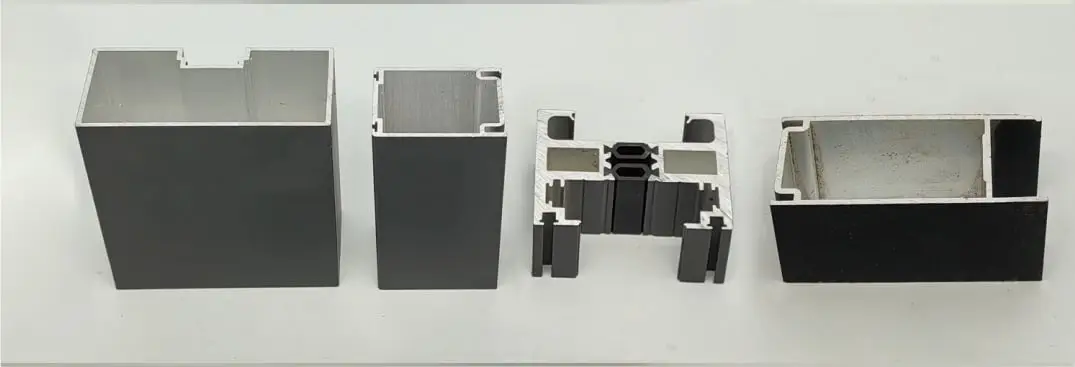
Fig. 1: Force diagram comparison: Standard hinge (left) vs. Pivot system (right). The pivot’s offset axis creates a balanced moment, reducing torsional stress on the frame by approximately 70% for a comparable leaf weight.
Deconstructing the Pivot: Anatomy of a Balanced System
The elegance of a pivot door’s swing belies a precisely calibrated assembly of high-tolerance components. Failure in any one element compromises the entire system’s integrity.
1. The Pivot Hardware Set: Axial Load Bearings
The heart of the system is a matched pair of pivots. The top pivot carries the lateral load, keeping the door in plane, while the bottom pivot carries the entire axial (downward) load of the door leaf, often through a thrust-bearing assembly. A high-grade set is engineered for a minimum dynamic load rating of 500kg. For a typical 180kg door, this provides a safety factor (SF) of 2.77, exceeding architectural hardware standards. The pivot points are typically constructed from forged stainless steel (grade 316 minimum) with sealed, self-lubricating bearings to resist environmental ingress.
2. The Door Leaf: Rigidity is Non-Negotiable
Deflection control is paramount. A leaf that flexes during operation will transfer unpredictable loads to the pivots and floor. For aluminum-framed Pivot Doors, the minimum recommended profile wall thickness is 3.0mm. Lighter 2.0mm sections may exhibit visible deflection (>3mm over 2.5m height) under load, leading to alignment issues. The internal reinforcement strategy—whether a galvanized steel sub-frame, aluminum I-beam, or composite stiffeners—must be engineered to limit deflection to ≤ L/500 (e.g., ≤5mm on a 2500mm leaf). Calculate Your Load Requirements
3. The Threshold & Floor Pivot: Managing Point Loads
The bottom pivot concentrates the door’s entire weight onto a footprint often less than 40mm in diameter. Without proper dispersal, this can exceed the compressive strength of standard screeds. The solution is a load-distributing threshold or a reinforced floor box. The engineering spec must account for the point load (e.g., 180kg / 12.5cm² = 14.4 N/mm²) and ensure the substrate can withstand it without crushing or settlement.
Kingston Engineering Protocols: From Specification to Installation
Specifying a pivot door is a process of defining constraints and tolerances. Ambiguity leads to field failures.
| Parameter | Critical Specification | Engineering Rationale |
|---|---|---|
| Leaf Weight | Precisely calculate kg (±2%). Include cladding (glass, timber). | Determines pivot bearing class, floor load, and counterbalance need. |
| Pivot Offset | Standard: 100-150mm from door edge. Custom offsets possible. | Larger offset increases mechanical advantage, reduces operating force, but alters clearances. |
| Wind Load Rating | Specify Pa requirement (e.g., 1200Pa for coastal). | Dictates glass thickness, frame stiffness, and latch holding force to prevent suction opening. |
| Floor Level Tolerance | ±1.5mm across pivot plate area. | Exceeding this induces bind in the axial bearing, causing premature wear and erratic swing. |
| Header Support | Structural assessment for top pivot reaction force. | The top pivot transfers lateral wind load into the structure; a non-structural lintel may be insufficient. |
These parameters are non-negotiable for a silent, fluid operation with a lifecycle measured in decades, not years. Submit Your Project Specs for Review
System Integration: The Hidden Details That Dictate Performance
Counterbalance Systems
For leaves exceeding 220kg, a counterbalance mechanism becomes critical. This is typically a concealed spring or hydraulic cartridge within the top pivot. It offsets 20-40% of the leaf’s weight, bringing the operational force down to a comfortable 5-7 Nm (Newton-metres) of torque. Without it, the door feels ponderous and risks damaging its own seals from uncontrolled closure.
Sealing & Weather Performance
A pivot door’s rotational movement differs from a hinged door’s arc. The seal compression profile must be engineered for this path. We specify compression-grade EPDM gaskets with a minimum Shore A hardness of 70, mounted on adjustable carriers. For high weather exposure, a dual-seal system (brush and compression) is integrated into the threshold. The gap between leaf and jamb is precisely calculated to allow for seal compression without excessive friction. Access Sealing Diagrams
Automation Compatibility
Retrofitting automation to an under-specified pivot door is a common point of failure. The door must first operate flawlessly manually, with deflection and friction minimized. The chosen pivot hardware must have a compatible drive shaft for motor attachment. Crucially, the system’s “breakout torque”—the force needed to initiate movement—must be below the motor’s rated starting torque, with a safety margin. We recommend a dedicated assessment for any automated pivot system.
The Final Calculation: Beyond the First Impression
A modern pivot door is a kinetic architectural element governed by static and dynamic forces. Its success hinges on moving beyond the visual statement to a rigorous engineering dialogue. It demands precise weight management, deflection control, and component specification that matches the calculated loads. When these factors are resolved during design, the result is a door that operates with silent, effortless authority for its entire service life—a true testament to resolved engineering.
Specification is the foundation. Download the Full Technical Specification Sheet