
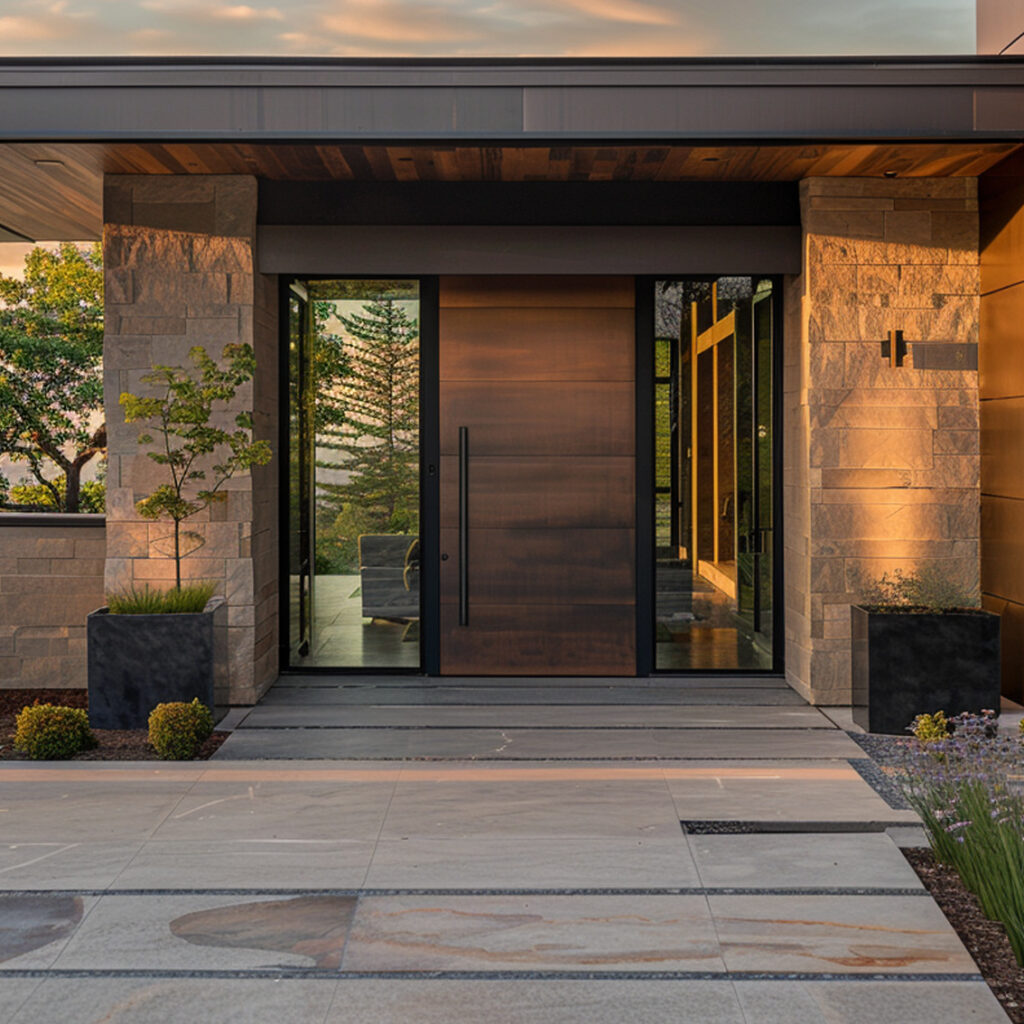
The Modern Front Door: More Than an Entryway
A Kingston Doors Expert Guide to Curb Appeal, Security, and Intelligent Design
For over four decades at Kingston, I’ve witnessed the evolution of the front door from a simple barrier to the centerpiece of home design. Today’s modern front door is a sophisticated fusion of art, engineering, and technology. It is the first and last impression of your home, a critical security component, and a statement of personal style. This guide distills decades of hardware and design expertise to help you navigate the essential considerations for selecting the perfect modern front door.
I. The Design Philosophy: Defining “Modern”
Modern door design is not merely a trend; it’s a philosophy rooted in clean lines, honest materials, and purposeful function. It moves away from excessive ornamentation toward simplicity and clarity of form.
- Minimalist Profiles: Slim, often full-height doors with reduced paneling. Think slab-style doors or those with subtle, recessed panels.
- Maximized Glass: Strategic use of glass to invite natural light and create visual connection. This includes large, insulated glass panels, narrow sidelights, and transoms with minimal framing.
- Bold, Saturated Colors & Natural Finishes: Deep matte black, charcoal grey, navy, or even vibrant hues make a statement. Conversely, the honest grain of natural wood (like oak, walnut, or sapele) is a timeless modern choice.
- Asymmetry & Dynamic Elements: Off-center handles, pivot hinge systems (which make the door itself a sculptural element), and mixed-material compositions (e.g., wood and metal).
II. Material Science: The Core of Performance
The material is the soul of your door, dictating its durability, insulation, maintenance, and aesthetic potential. As your product expert, here’s my unvarnished breakdown.
Material Comparison at a Glance
| Material | Core Advantages | Considerations | Ideal For |
|---|---|---|---|
| Engineered Wood / Fiberglass (Premium) | Superior thermal efficiency, exceptional dimensional stability (won’t warp), can mimic wood grain perfectly, low maintenance, high security. | Higher initial cost than basic steel. The quality of the skin and core varies greatly by manufacturer. | Any climate, especially extreme zones. Homeowners seeking the wood look without the upkeep. |
| Solid Hardwood | Unmatched natural beauty, prestige, can be refinished multiple times, solid feel. | Requires regular maintenance (finishing). Can expand/contract with humidity. Premium hardwoods are a significant investment. | Dry to moderate climates, custom projects, architectural statements where authenticity is paramount. |
| Steel (with Polyurethane Core) | Maximum security, very affordable, good insulation with foam core, stable. | Prone to dents. Finish is typically baked-on paint; cannot be stained. Can rust if finish is compromised. | Budget-conscious security focus, rental properties, protected entries. |
| Aluminum (Thermally Broken) | Ultra-slim sightlines for maximal glass, corrosion-resistant, powder-coated finishes in any color. | Less insulating than wood/fiberglass unless highly engineered. Can feel less substantial. Higher cost. | Contemporary homes with large glass expanses, coastal environments. |
III. Hardware & Security: The Intelligent Details
Hardware is the jewelry and the muscle of your door. It must be selected as an integrated system, not an afterthought.
Locking Systems
A grade 1 or 2 mortise lock is the industry standard for high-performance doors. It offers superior security through a robust internal mechanism. Multi-point locking systems (with bolts at the top, center, and bottom) provide exceptional resistance to forced entry. Smart locks should be compatible with the door’s construction and not compromise the physical security of the core mechanism.
Hinge Engineering
For heavy modern doors (especially full-glass or solid wood), standard butt hinges may not suffice. Pivot hinges (top and bottom) distribute weight evenly, allowing for smoother operation of massive doors and a cleaner aesthetic with no visible hinge knuckles on the side. Always specify ball-bearing hinges for durability.
Weather & Light Seals
A modern door is only as good as its seal. Look for compression bulb seals and magnetic weatherstripping (like that on a refrigerator) for superior air and water infiltration ratings. For doors with glass, ensure the glazing system uses warm-edge spacers and is fully sealed to prevent condensation.
IV. Performance Metrics: Beyond Looks
Your door is part of your building envelope. Its performance is quantifiable. Ask your supplier for these ratings:
- U-Factor: Measures insulation value. Lower is better (aim for ≤ 0.30 for a high-performance door in most zones).
- Design Pressure (DP) Rating: Indicates structural performance against wind and weather. A higher DP rating (e.g., DP50) is crucial for coastal or high-wind areas.
- Water Penetration Resistance: Rated in psf (pounds per square foot). A higher number means better protection against driven rain.
- Forced Entry Resistance: Look for ratings like ANSI/WDMA I.A. or specific testing standards that indicate resistance to common break-in attempts.
V. The Kingston Checklist: Final Selection Points
Before you finalize your investment, run through this list:
- SWING & HANDING: Verify the direction the door opens (inward or outward) and its hand (left or right). This affects hardware selection and installation.
- THRESHOLD INTEGRATION: The threshold is critical for weather sealing and accessibility. Choose a low-profile, thermally broken threshold that complements the door’s design and meets accessibility needs.
- GLASS SPECIFICATION: If your door has glass, insist on insulated, low-E glass with argon fill. It improves U-factor dramatically and protects interiors from UV fading.
- PROFESSIONAL INSTALLATION: This is non-negotiable. A $5,000 door installed poorly will perform like a $500 door. Ensure your installer is certified and understands the precise requirements of modern, high-performance door systems.